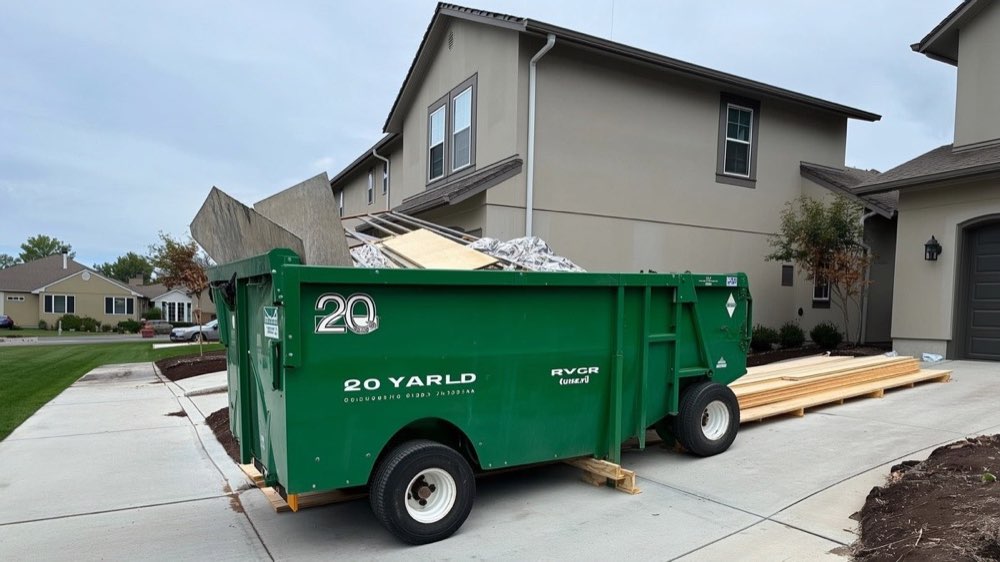
A Lindley Park remodel or a High Point flip leaves the same pile: old cabinets, tile, deck boards, fence panels, shingles. It goes in a single load so your contractor is not tripping over it and the driveway is usable again, or a roll-off sits there for as long as the work runs.
Concrete, brick and soil are charged by the ton, so tell the crew which of those is in the pile and the first number is the right one.
What a construction and renovation debris removal job involves
- Describe or photograph the pile; the price already includes the landfill fee
- Collected from wherever it landed: driveway, garage or the room being torn out
- Clean wood, metal and cardboard pulled out for recycling when the yard accepts them
- Site left clear for the next trade
What's included
- Drywall, flooring, cabinets, decking, fencing and roofing, nails in
- Loading from the driveway, the garage or the room being worked on
- A weight allowance named in the quote for mixed piles
- Set pickup days for contractors so the site stays clear
- A dumpster quoted alongside for jobs that run past a week
Quoted separately or not taken
- Asbestos, debris with lead paint on it, and anything else the state regulates
- Loose dirt or gravel beyond a few wheelbarrows (quoted as a separate haul)
- Demolition itself (the debris has to be down before the crew loads it)
Renovation cleanup for Triad remodels
The 1920s and 1930s houses of Fisher Park and Sunset Hills and the 1950s ranches of Starmount are being opened up and refitted one at a time, and each one produces a load of drywall and cabinets. If the work will run past a week, the dumpster rental page is the better fit.
Renovation debris is priced by weight because the landfill charges by the ton, and that is where a Greensboro quote is won or lost. A kitchen's worth of cabinets, countertops and old flooring is bulky but light and goes by the load. Tile, plaster from a lath wall, brick from a chimney and broken concrete from a patio are heavy, and a pile that looks like half a truck can weigh more than a full one. Say which of the two you have and the quote is right the first time.
The crew hauls from wherever the pile is: the driveway, the garage, the backyard, or the room the contractor is working in. Fence panels, deck boards and shingles are taken with the nails still in. Clean wood, metal and cardboard are pulled for recycling where the facility takes them, which keeps construction waste removal cheaper than a mixed load. Nothing from a job site can go in the city's garbage or bulk collection, so the Greensboro construction debris removal truck or a dumpster is the only route for it.
Construction and Renovation Debris Removal pricing in Greensboro
By volume for light debris: a bathroom's worth of drywall and tile backer is a quarter truck, $225 to $325; a kitchen remodel is usually a half to three-quarter truck, $375 to $650; a whole-house gut fills a full truck at $625 to $800 per load. Heavy material such as concrete, brick, plaster and dirt is quoted by weight instead, and the crew says so before loading. For a remodel that runs a week or more, a 10 to 20-yard dumpster at $325 to $600 per week usually costs less than repeated truck loads.
Full price list and what moves the price →
Related: Bulk Trash Pickup in Greensboro: What the City Takes and What It Won't, Junk removal in High Point, Junk removal in Summerfield. Official page: City of Greensboro.
Construction and Renovation Debris Removal questions, answered
How is construction debris priced by weight?
The landfill charges by the ton, so heavy material is quoted on weight rather than on how much of the truck it fills. Concrete, brick, tile, plaster, dirt and roofing shingles are the usual weight items. Light debris such as drywall, cabinets, trim, carpet and deck boards is priced by the load. A mixed pile is quoted as a load with a weight allowance, and the crew names that allowance before anything is lifted, not after the truck is weighed.
Can renovation debris go in my regular garbage or bulk pickup in Greensboro?
No. The city's garbage and bulk-item collection does not take drywall, tile, lumber, shingles or concrete, and a pile of it at the curb will sit there. Job-site debris goes to a disposal facility, either by truck after the work or in a dumpster during it. The crew does both and will say which one is cheaper for the length of your project.
How fast can you pick up from a job site?
Usually within the same week, and often the next day for a driveway pile that is ready to load. Contractors book a set pickup day so the site stays clear and the next trade can start. If the pile grows over several days, a dumpster delivered at the start of the job avoids the scheduling altogether and is pulled when you call.